
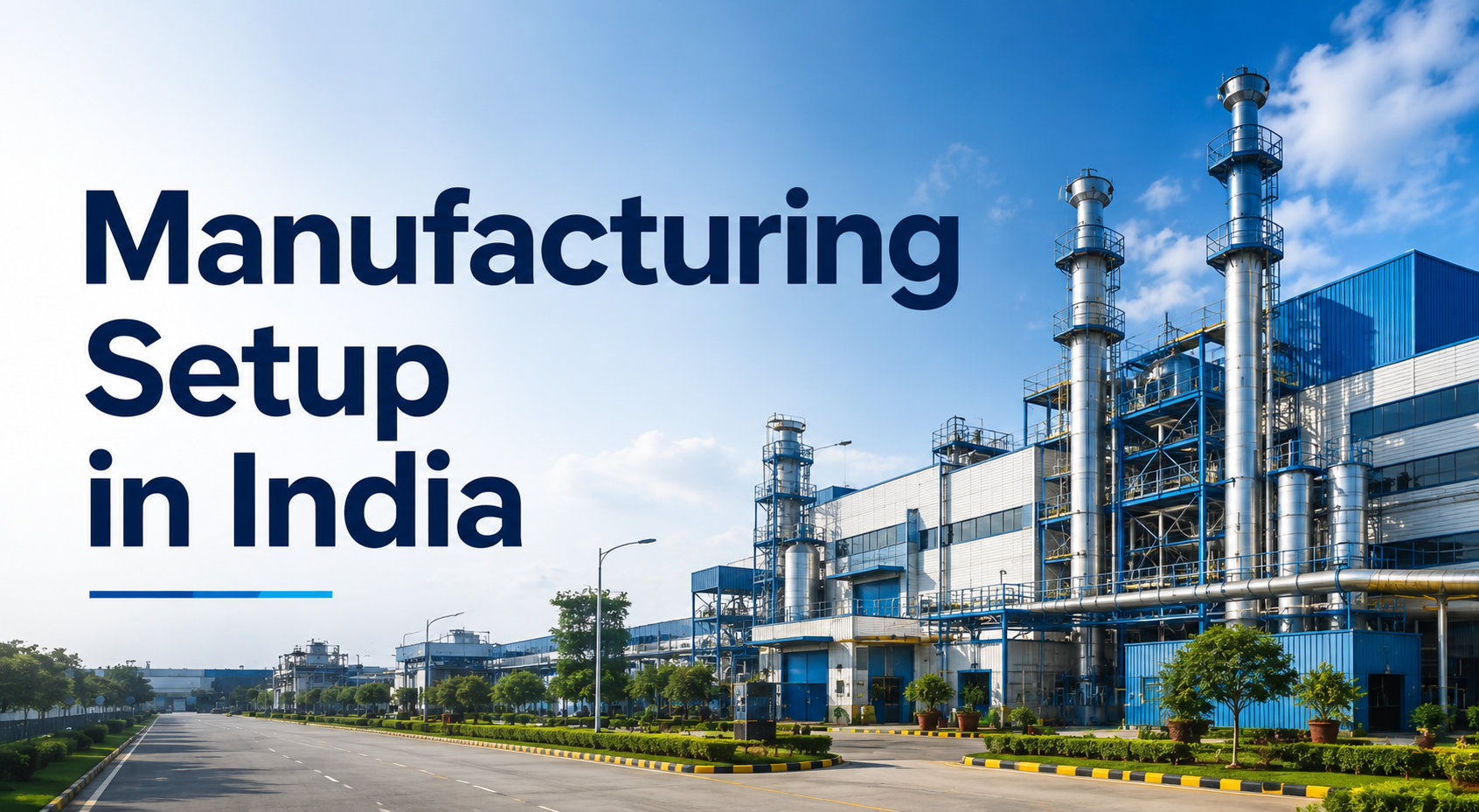
Manufacturing Setup Services in India
Establishing a manufacturing facility in India offers foreign companies access to a large domestic market, an expanding industrial ecosystem, competitive operating capabilities, and opportunities to serve regional and global customers.
However, setting up a manufacturing unit involves several strategic, regulatory and operational decisions. Foreign investors must evaluate the appropriate legal entity, foreign investment structure, industrial location, land or premises, state incentives, factory-related approvals, environmental requirements, taxation, customs, labour laws and ongoing compliance obligations.
EzyBiz India assists foreign companies throughout the manufacturing setup process in India. We provide integrated support for entity formation, foreign direct investment, FEMA compliance, taxation, GST, customs, factory-related registrations, labour compliance, payroll, accounting and ongoing regulatory management.
Where specialised support is required for land identification, engineering, plant design, environmental studies, construction or project execution, we coordinate with suitable independent technical and professional specialists.
Manufacturing Setup in India
India has become an important manufacturing destination for international companies seeking to diversify their operations, enter a growing consumer market or establish a regional production base.
A manufacturing project in India may involve setting up a new factory, acquiring an existing industrial unit, entering into a joint venture with an Indian partner, engaging a contract manufacturer or gradually transitioning from imports to local production.
Each model has different implications for ownership, investment, control, taxation, technology transfer, regulatory approvals and operational responsibility. Therefore, the proposed manufacturing structure should be carefully evaluated before the company commits significant capital or enters into land, construction or machinery contracts.
EzyBiz works with foreign promoters, multinational groups and overseas investors to develop a practical manufacturing entry structure aligned with their commercial objectives and regulatory requirements.
Why Set Up a Manufacturing Unit in India?
India offers several strategic advantages to foreign companies planning to establish manufacturing operations.
The suitability of India for a particular project depends on the nature of the product, target customers, availability of raw materials, logistics requirements, workforce needs, capital investment, regulatory approvals and the incentives offered by the selected state.
Access to a Large Domestic Market
Local manufacturing enables foreign companies to serve Indian customers more efficiently and develop a stronger long-term presence in the market.
It may also help companies reduce dependence on imported finished goods, shorten delivery timelines, respond more quickly to customer requirements and build relationships with Indian distributors, institutional buyers and original equipment manufacturers.
For products with significant domestic demand, establishing local manufacturing may provide greater commercial flexibility than operating solely through imports.
Development of Local Supply Chains
India has established supply networks across several industrial sectors, including automotive components, engineering goods, electronics, chemicals, pharmaceuticals, textiles, renewable energy equipment, consumer products and industrial machinery.
Foreign companies specifically evaluating industrial investment can explore our detailed guide to manufacturing opportunities in India for foreign companies covering electronics, EVs and auto components, pharmaceuticals, medical devices, specialty chemicals, renewable energy equipment, engineering, food processing and other high-potential manufacturing sectors.
Foreign investors evaluating which industries offer the strongest expansion potential can also review our guide to the top growth sectors in India for foreign companies, covering major opportunities across manufacturing, technology, renewable energy, electric mobility, healthcare and other high-growth sectors.
Depending on the sector and location, a foreign manufacturer may be able to source raw materials, components, packaging, logistics services and maintenance support locally.
A detailed vendor and supply-chain assessment should be undertaken before selecting the final manufacturing location.
Availability of Skilled and Technical Workforce
India offers access to engineers, technicians, plant personnel, finance professionals, compliance specialists and managerial talent.
The availability and cost of employees may vary considerably between industrial regions. Companies should therefore assess the local availability of the specific technical and operational skills required for their manufacturing activities.
Workforce planning should also consider applicable labour laws, payroll requirements, social security obligations, employee policies and local employment practices.
State-Level Industrial Incentives
Different Indian states offer industrial policies and incentive packages to encourage investment and employment.
Depending on the nature, size and location of the project, incentives may relate to capital investment, employment generation, electricity duty, stamp duty, state taxes, land-related support or other industrial benefits.
The availability of an incentive should not be assumed merely on the basis of a general policy announcement. Eligibility conditions, investment thresholds, application procedures, implementation timelines and post-approval obligations must be examined carefully.
Where appropriate, EzyBiz can assist with the financial and regulatory review of available incentives and coordinate with suitable local specialists for state-specific applications.
Export and Regional Supply Opportunities
A manufacturing facility in India may also be used to supply customers outside India, subject to applicable customs, foreign trade, tax and sector-specific requirements.
Companies planning an export-oriented manufacturing model should assess the availability of suitable ports, airports, freight corridors, customs facilities, export incentives and logistics infrastructure before selecting the location.
The proposed structure should also consider import duties on machinery and raw materials, export documentation, transfer pricing and foreign exchange regulations.
Diversification of Global Manufacturing Operations
Foreign companies may establish manufacturing operations in India to diversify production across multiple countries and reduce excessive dependence on a single manufacturing location.
Foreign manufacturers evaluating alternative Asian production locations may also review our India vs Vietnam for foreign companies comparison covering manufacturing, supply chains, market access, talent and long-term expansion considerations.
India can form part of a wider regional or global manufacturing strategy, particularly where the company also intends to develop a long-term Indian customer base.
The decision should be supported by a detailed assessment of cost, capacity, supply-chain resilience, regulatory requirements and implementation risks.
Foreign manufacturers diversifying production beyond China can also review our detailed China Plus One Strategy in India guide covering manufacturing opportunities, sectors, supply chains, FDI, incentives and implementation considerations.
Manufacturing Entry Models in India
A foreign company may adopt different models for entering the Indian manufacturing sector. The most appropriate structure depends on the required level of ownership, control, capital commitment, speed of entry and reliance on local partners.
Wholly Owned Subsidiary
A foreign company may establish an Indian company as its wholly owned subsidiary, subject to the applicable foreign investment policy and sector-specific conditions.
This model generally provides the foreign parent with greater control over management, technology, operations, intellectual property, employees and long-term business strategy.
A wholly owned subsidiary may acquire or lease industrial premises, employ personnel, enter into customer and supplier contracts, import machinery and undertake manufacturing activities after obtaining the required registrations and approvals.
It is often suitable for foreign companies seeking a direct and long-term manufacturing presence in India.
Joint Venture with an Indian Partner
A foreign investor may establish a joint venture with an Indian company, promoter or strategic partner.
A joint venture may provide access to local market knowledge, existing customers, suppliers, technical capabilities, industrial premises, licences or distribution networks.
However, the success of the arrangement depends on careful partner selection and a comprehensive shareholders’ agreement covering management rights, funding obligations, technology, intellectual property, reserved matters, transfer restrictions, deadlock resolution and exit rights.
Commercial expectations and governance arrangements should be clearly documented before the parties make substantial investments.
Acquisition of an Existing Manufacturing Business
A foreign company may acquire shares in an existing Indian manufacturing company or purchase an operating business or selected assets.
An acquisition may provide faster access to an established facility, employees, customers, licences and supply arrangements. However, it may also involve historical tax, regulatory, environmental, labour and contractual exposures.
Legal, financial, tax, operational and regulatory due diligence is essential before completing the acquisition.
The proposed transaction must also be reviewed from the perspective of valuation, foreign investment regulations, taxation, competition requirements and sector-specific approvals.
Contract Manufacturing Arrangement
A foreign company may initially engage an Indian manufacturer to produce goods on its behalf instead of establishing its own factory.
Contract manufacturing may reduce the initial capital commitment and allow the foreign company to test demand before investing in a dedicated manufacturing facility.
The arrangement should clearly address product specifications, quality standards, raw-material sourcing, pricing, intellectual property, confidentiality, warranties, regulatory responsibility and termination rights.
The foreign company should also evaluate whether the proposed arrangement creates any tax, customs, permanent establishment, transfer pricing or regulatory implications in India.
Phased Manufacturing Entry
Some foreign companies begin by importing and distributing finished products in India and subsequently move towards local assembly, contract manufacturing or complete manufacturing.
A phased strategy may allow the company to understand the Indian market before making a significant capital investment.
However, the legal and tax structure adopted during the initial stage should be capable of supporting the company’s future manufacturing plans without unnecessary restructuring or duplication of compliance.
Key Decisions Before Establishing a Factory in India
Manufacturing setup should begin with a structured feasibility and entry-planning exercise. Important decisions taken at the initial stage can significantly affect project cost, implementation time and regulatory risk.
Product and Regulatory Classification
The company should first identify the exact products proposed to be manufactured, their technical specifications, raw materials, production process and intended use.
This information is necessary to determine the applicable industrial classification, foreign investment conditions, import-export classification, product standards and sector-specific approvals.
Certain products may require additional registrations, testing, certification or approvals from specialised regulatory authorities.
Foreign Investment and Ownership Structure
The proposed ownership structure should be reviewed under India’s foreign direct investment framework.
The company must determine whether foreign investment is permitted under the automatic route or whether prior government approval or other sector-specific clearance may be required.
The structure should also consider the identity and nationality of the foreign investor, ultimate beneficial ownership, proposed shareholding, funding requirements and future capital infusion plans.
Selection of the Legal Entity
The legal entity should be selected after evaluating ownership, liability, funding, repatriation, taxation, governance, compliance and exit requirements.
For a foreign company establishing its own manufacturing operations, an Indian private limited company is generally the most commonly considered structure.
The final decision should nevertheless be based on the specific commercial and regulatory circumstances of the project.
Selection of State and Industrial Location
The location of the manufacturing facility may affect land cost, logistics, availability of employees, access to suppliers, electricity, water, transport infrastructure and state incentives.
The company should compare suitable states and industrial regions based on operational requirements rather than selecting a location solely because of a headline incentive.
The assessment should include proximity to customers, suppliers, ports, airports, highways and relevant industrial clusters.
Purchase or Lease of Industrial Premises
The company must decide whether to acquire industrial land, lease an existing factory or operate from premises located within an industrial park.
Before entering into any agreement, the company should verify land title, permitted land use, zoning, access rights, utilities, construction permissions and restrictions imposed by the relevant industrial authority.
Land and premises due diligence should be completed by appropriate legal and technical specialists.
Greenfield or Brownfield Manufacturing Project
A greenfield project involves establishing a new manufacturing facility, while a brownfield project generally involves acquiring, leasing or expanding an existing facility.
A greenfield project may provide greater flexibility in plant design and future expansion but may require more time for land, construction, utilities and approvals.
A brownfield project may allow faster commencement of operations, but the existing premises, licences, machinery and historical compliance position must be carefully reviewed.
Capital Investment and Funding Plan
The company should prepare an initial project budget covering land or lease deposits, construction, machinery, utilities, registrations, professional fees, working capital and operating expenses.
The proposed funding may consist of equity, foreign direct investment, shareholder loans, external commercial borrowings, domestic borrowing or a combination of permissible sources.
The funding structure must be reviewed under FEMA, tax, transfer pricing and corporate law requirements before funds are remitted or financial agreements are executed.
Project Implementation Responsibility
The foreign investor should determine which activities will be managed internally and which will be assigned to external specialists.
EzyBiz directly supports the tax, regulatory, FEMA, entity formation, accounting, payroll and compliance aspects of the manufacturing project.
Technical activities such as land identification, engineering design, environmental studies, plant construction, equipment installation and project management may be coordinated through suitable independent specialists based on the requirements of the project.
Our Manufacturing Setup Services in India
Establishing a manufacturing unit requires coordination across multiple legal, tax, regulatory and operational workstreams. Delays often arise when entity formation, foreign investment, premises selection, licensing and tax registrations are handled independently without an integrated implementation plan.
EzyBiz India provides end-to-end advisory and compliance support for foreign companies setting up manufacturing operations in India. Our role is focused on entity establishment, foreign investment, FEMA, taxation, GST, customs, labour compliance, accounting, payroll and ongoing regulatory management.
Where the project requires specialised technical expertise, we coordinate with appropriate independent professionals for land due diligence, engineering, construction, environmental studies, plant design and project execution.
Manufacturing Entry Strategy and Feasibility Review
We begin by understanding the foreign investor’s proposed products, manufacturing process, target customers, investment size, ownership expectations and implementation schedule.
The initial review may cover:
- the proposed manufacturing model;
- ownership and management structure;
- foreign investment eligibility;
- indicative entity and tax structure;
- location and state considerations;
- major regulatory approvals;
- import and customs requirements;
- labour and employment considerations;
- proposed funding structure; and
- key implementation risks.
The objective is to identify the appropriate entry structure and the principal regulatory requirements before significant expenditure is committed.
Comparison of Manufacturing Entry Models
We assist foreign companies in comparing suitable entry models such as:
- wholly owned subsidiary;
- joint venture;
- acquisition of an existing manufacturing business;
- contract manufacturing;
- local assembly;
- phased transition from imports to manufacturing; and
- greenfield or brownfield manufacturing.
The comparison may consider ownership control, capital requirements, implementation time, regulatory exposure, taxation, intellectual property protection and long-term scalability.
State and Industrial Location Assessment
The selection of the state and industrial location can materially affect the cost and success of a manufacturing project.
We assist in evaluating states and industrial regions from a tax and regulatory perspective. The assessment may include:
- applicable state industrial policies;
- potential investment incentives;
- stamp duty implications;
- state tax considerations;
- labour and employment environment;
- proximity to ports, airports and logistics corridors;
- availability of industrial infrastructure;
- regulatory authorities involved; and
- recurring state-level compliance requirements.
Operational factors such as land suitability, utility availability, technical infrastructure and construction feasibility may be reviewed with suitable independent technical specialists.
Review of State Government Incentives
State governments may offer incentives to eligible manufacturing projects based on investment, employment, location, sector and project size.
Depending on the applicable policy, potential incentives may relate to:
- capital investment;
- employment generation;
- electricity duty;
- stamp duty;
- state tax benefits;
- interest subsidy;
- infrastructure support;
- land-related concessions; or
- other sector-specific assistance.
We assist in reviewing the relevant policy, eligibility conditions, application procedures and compliance obligations.
The availability of incentives depends on the applicable state policy and project-specific conditions. Incentives should therefore be assessed before the final investment and location decision is taken.
Project Structuring and Implementation Roadmap
Once the entry model and preferred location are identified, we prepare a practical implementation roadmap.
The roadmap may set out:
- entity incorporation;
- foreign investment documentation;
- banking arrangements;
- capital infusion;
- premises finalisation;
- tax registrations;
- factory-related approvals;
- environmental registrations;
- labour registrations;
- import-export registrations;
- commencement of operations; and
- post-setup compliance.
A structured roadmap helps the foreign investor understand the sequence of activities and dependencies between different approvals.
Entity Formation and Foreign Investment Support
The Indian legal entity generally becomes the principal vehicle for acquiring or leasing premises, employing personnel, importing machinery, entering into contracts and carrying on manufacturing activities.
The entity and investment structure should therefore be finalised at an early stage.
Incorporation of an Indian Company
We assist foreign promoters with the incorporation of an Indian private limited company for the proposed manufacturing business.
Our support may include:
- name application;
- review of proposed business objects;
- preparation of incorporation documents;
- coordination for digital signatures;
- director identification requirements;
- registered office documentation;
- filing of incorporation forms;
- Permanent Account Number;
- Tax Deduction and Collection Account Number; and
- post-incorporation corporate formalities.
The company’s object clause should adequately cover the proposed manufacturing, import, export, sale, distribution, service and related business activities.
Shareholding and Governance Structure
We assist in structuring the proposed shareholding and governance arrangements between the foreign parent, Indian shareholders and strategic partners, where applicable.
The review may cover:
- authorised and paid-up share capital;
- percentage of foreign ownership;
- board composition;
- appointment of Indian and foreign directors;
- management rights;
- reserved matters;
- funding obligations;
- dividend and repatriation considerations; and
- future investment or dilution.
For joint ventures, the rights and obligations of the parties should be documented through an appropriate shareholders’ agreement and related corporate documents.
Foreign Direct Investment Review
Foreign investment in an Indian manufacturing company must comply with the applicable foreign direct investment policy, sectoral conditions and FEMA regulations.
We assist in reviewing:
- whether the proposed activity is permitted under the automatic route;
- whether government approval may be required;
- applicable sectoral caps or conditions;
- investor nationality and beneficial ownership;
- pricing and valuation requirements;
- proposed mode of investment;
- reporting obligations; and
- downstream investment implications.
The foreign investment review should be completed before funds are remitted or shares are issued.
Foreign Investment Documentation and Reporting
We assist with the documentation and reporting requirements relating to foreign investment in the Indian company.
This may include:
- board and shareholder approvals;
- share subscription documents;
- valuation support;
- receipt of foreign investment funds;
- allotment of shares;
- issue of share certificates;
- foreign investment reporting;
- maintenance of statutory records; and
- coordination with the authorised dealer bank.
Timely reporting is important to avoid non-compliance under FEMA.
Beneficial Ownership and Investor Due Diligence
Foreign investors may be required to provide information and documents relating to their ownership, control and ultimate beneficial owners.
We assist in compiling and reviewing:
- constitutional documents;
- ownership charts;
- details of intermediate holding entities;
- ultimate beneficial ownership declarations;
- board resolutions;
- authorised signatory documents;
- tax identification details; and
- know-your-customer documentation.
Additional review may be required where the investor, shareholder or beneficial owner is connected with a country sharing a land border with India or where sector-specific approval conditions apply.
Bank Account Opening and Capital Infusion
After incorporation, the Indian company must establish appropriate banking arrangements for receiving foreign investment and conducting business operations.
We assist in coordinating:
- opening of the company’s bank account;
- submission of corporate and foreign shareholder documents;
- receipt of share capital;
- identification of the correct remittance purpose;
- coordination of foreign inward remittance documentation;
- issue and allotment of shares; and
- related FEMA reporting.
The timing of incorporation, bank account opening, capital receipt and share allotment should be carefully managed.
Funding of the Manufacturing Project
A manufacturing project may be funded through equity, preference shares, permissible debt, external commercial borrowings, domestic loans or a combination of funding sources.
We assist in evaluating the funding structure from the perspective of:
- FEMA;
- corporate law;
- taxation;
- transfer pricing;
- interest deductibility;
- withholding tax;
- repayment and repatriation; and
- financial reporting.
The funding structure should be aligned with the expected capital expenditure, working-capital requirements and implementation schedule.
Industrial Land and Factory Premises Coordination
The proposed manufacturing premises must be suitable for industrial use and capable of supporting the intended manufacturing process.
EzyBiz does not directly provide land brokerage, engineering or construction services. However, we can coordinate with independent legal, technical and property specialists where required.
Industrial Land or Premises Requirement Assessment
Before searching for land or factory premises, the company should determine its principal operational requirements.
These may include:
- land area;
- built-up area;
- production capacity;
- electricity load;
- water requirement;
- effluent generation;
- waste disposal;
- warehouse space;
- access for heavy vehicles;
- proximity to suppliers and customers; and
- scope for future expansion.
A clear requirement assessment helps reduce the risk of selecting unsuitable premises.
Coordination for Land Identification
Where required, we may coordinate with suitable independent property or industrial-location specialists to identify potential premises.
The final selection should take into account:
- permitted industrial use;
- title and ownership;
- development authority restrictions;
- lease or transfer conditions;
- access roads;
- utility connections;
- environmental suitability;
- local approvals; and
- future expansion requirements.
The foreign investor should undertake appropriate legal and technical due diligence before acquiring or leasing the premises.
Legal Due Diligence of Industrial Property
Legal due diligence of the proposed land or premises should be carried out by an appropriate property-law specialist.
The review may cover:
- ownership and title documents;
- encumbrances;
- land-use permissions;
- zoning classification;
- industrial authority approvals;
- lease restrictions;
- transfer conditions;
- litigation;
- access rights; and
- property-related taxes and dues.
No substantial advance or binding commitment should ordinarily be made without satisfactory due diligence.
Lease or Purchase Documentation
Depending on the project, the Indian company may purchase industrial land, obtain land from an industrial development authority or lease an existing factory.
The documentation should clearly address:
- consideration or rent;
- security deposit;
- lease term;
- renewal rights;
- permitted use;
- construction and alteration rights;
- maintenance obligations;
- utility arrangements;
- statutory approvals;
- termination rights; and
- restoration obligations.
The transaction should also be reviewed for stamp duty, registration, withholding tax, GST and accounting implications.
Coordination with Engineering and Construction Specialists
A greenfield manufacturing project may require architectural, engineering, construction and project-management support.
Where required, we may coordinate with suitable independent specialists for:
- plant layout;
- architectural design;
- civil construction;
- structural engineering;
- electrical systems;
- mechanical systems;
- utility planning;
- machinery installation;
- fire-safety design; and
- project execution.
Technical consultants should independently evaluate the feasibility, cost and implementation requirements of the project.
Factory and Industrial Regulatory Approvals
The registrations and approvals required for a manufacturing unit depend on the product, production process, location, workforce, machinery, utilities and environmental impact.
An approval matrix should be prepared for each project before manufacturing activities commence.
Factory Licence and Registration
A manufacturing premises may be required to obtain registration and a licence under the applicable factory law and state rules.
The process may require information relating to:
- factory layout;
- manufacturing process;
- installed machinery;
- power usage;
- number of workers;
- safety arrangements;
- occupier and manager;
- building plans; and
- health and welfare facilities.
The exact requirements differ between states and should be confirmed with the relevant authority.
Approval of Factory Building Plans
Before construction or use of the factory premises, approval of the building plan or factory layout may be required from the relevant authority.
The submission may include:
- site plan;
- building plan;
- machinery layout;
- emergency exits;
- ventilation arrangements;
- sanitation facilities;
- storage areas;
- fire-safety measures; and
- worker welfare facilities.
The plans should be prepared and certified by appropriate technical professionals.
Consent to Establish
Depending on the manufacturing process and environmental classification, the company may be required to obtain Consent to Establish from the relevant State Pollution Control Board or Pollution Control Committee before commencing construction or installing machinery.
The application may require details regarding:
- manufacturing process;
- raw materials;
- finished products;
- water consumption;
- wastewater generation;
- air emissions;
- fuel consumption;
- hazardous materials;
- waste generation; and
- pollution-control systems.
The environmental classification of the proposed activity should be assessed at an early stage.
Consent to Operate
Before commercial production begins, the manufacturing unit may be required to obtain Consent to Operate.
The authority may verify whether the plant, machinery and pollution-control systems have been installed in accordance with the approved proposal.
The consent may be issued subject to conditions relating to:
- production capacity;
- emissions;
- effluent treatment;
- waste management;
- monitoring;
- record maintenance; and
- periodic renewal.
Compliance with the conditions of the consent must be monitored after operations commence.
Environmental Clearance
Certain categories of projects may require prior environmental clearance based on the nature, size, location or environmental impact of the proposed activity.
Where environmental clearance is applicable, the company may need support from specialised environmental consultants for:
- project reports;
- environmental impact studies;
- baseline data;
- public consultation;
- risk assessment;
- environmental management plans; and
- submissions before the relevant authorities.
EzyBiz may coordinate with appropriate independent environmental specialists where required.
Hazardous Waste and Other Environmental Authorisations
A manufacturing unit handling hazardous substances or generating specified waste may require additional environmental authorisations.
These may relate to:
- hazardous waste;
- electronic waste;
- battery waste;
- plastic packaging;
- used oil;
- biomedical waste;
- chemical storage; or
- other regulated waste streams.
The applicability of each requirement depends on the product, raw materials and manufacturing process.
Extended Producer Responsibility Registration
Manufacturers, importers or brand owners dealing with specified products or packaging may be subject to Extended Producer Responsibility obligations.
Depending on the product category, the company may need to:
- obtain registration;
- declare the quantity introduced into the market;
- meet collection or recycling targets;
- purchase or generate certificates;
- maintain records; and
- file periodic returns.
Extended Producer Responsibility requirements should be reviewed as part of the product-compliance assessment.
Fire Safety Approval
The factory may require approval or a no-objection certificate from the relevant fire authority.
The requirements may include:
- fire exits;
- alarms;
- extinguishers;
- hydrants;
- sprinklers;
- water storage;
- emergency lighting;
- evacuation plans;
- storage controls; and
- periodic inspection.
The fire-safety design should be incorporated during the planning and construction stage rather than after completion of the premises.
Building and Local Authority Approvals
Depending on the location and nature of the premises, approvals may also be required from the industrial development authority, municipal body or other local authority.
These may relate to:
- building construction;
- land use;
- occupancy;
- completion certificate;
- water connection;
- sewerage;
- signage;
- trade activities; and
- local safety requirements.
The applicable authority and procedure vary by state and industrial area.
Electricity and Utility Approvals
Manufacturing units may require industrial electricity connections, enhanced power loads or approvals for captive power, generators, boilers, pressure vessels or other utilities.
The company should assess:
- sanctioned electricity load;
- backup power requirements;
- transformer requirements;
- water availability;
- gas connection;
- compressed air;
- steam generation;
- boiler registration; and
- energy-related approvals.
Technical and regulatory requirements should be incorporated into the project schedule.
Product-Specific Licences and Certifications
Certain products may require approval, registration, testing or certification before they can be manufactured or sold in India.
Depending on the product, the requirements may involve:
- quality standards;
- safety certification;
- legal metrology;
- packaging and labelling;
- food or pharmaceutical regulation;
- telecom approval;
- electrical product certification;
- chemical regulation; or
- sector-specific licensing.
A product-level regulatory review should be conducted before production and commercial sale.
GST, Customs and Import-Export Registrations
Manufacturing companies commonly import machinery, components or raw materials and sell finished goods within India or overseas.
The tax and customs structure should be reviewed before contracts are signed and commercial transactions begin.
GST Registration
The Indian manufacturing company will generally require registration under the Goods and Services Tax framework, subject to the applicable provisions.
We assist with:
- GST registration;
- principal and additional place of business;
- factory and warehouse details;
- authorised signatory documentation;
- bank details;
- product and service classification; and
- post-registration compliance setup.
The registration structure should reflect the company’s manufacturing, warehousing and sales locations.
GST Structuring for Manufacturing Operations
We assist in reviewing the GST implications of the proposed business model, including:
- procurement of raw materials;
- purchase of machinery;
- job work;
- contract manufacturing;
- inter-state movement;
- stock transfers;
- warehousing;
- sale of finished goods;
- exports;
- input tax credit; and
- reverse-charge obligations.
The invoicing and supply-chain structure should be designed to support accurate tax treatment and input tax credit.
Importer Exporter Code
An Importer Exporter Code is generally required where the Indian company proposes to import machinery, raw materials, components or finished goods, or export manufactured products.
We assist with:
- application for the Importer Exporter Code;
- submission of company and bank documents;
- updating of registered particulars;
- coordination of digital-signature requirements; and
- periodic confirmation or modification of IEC details.
The IEC should be obtained before the first import or export transaction.
Customs Classification and Duty Review
Before importing machinery, components or raw materials, the company should determine the appropriate customs classification and applicable duty structure.
The review may cover:
- customs tariff classification;
- basic customs duty;
- social welfare surcharge;
- integrated GST;
- anti-dumping or safeguard duty;
- exemption notifications;
- country-of-origin requirements; and
- import restrictions.
Where classification is complex, advice from an appropriate customs specialist may be required.
Import of Plant and Machinery
The import of manufacturing equipment should be planned carefully to avoid delays at the port and unexpected duty costs.
The company should review:
- technical description;
- customs classification;
- valuation;
- country of origin;
- import policy;
- used or new machinery status;
- mandatory certifications;
- project import possibilities;
- installation obligations; and
- documentation requirements.
The purchase agreement should clearly address freight, insurance, customs responsibility, installation and warranty.
Import of Raw Materials and Components
Raw materials and components may be freely importable or subject to licensing, standards, testing or sector-specific restrictions.
The company should verify:
- import policy status;
- customs classification;
- applicable duties;
- product standards;
- labelling;
- end-use conditions;
- hazardous material requirements; and
- documentation.
Import compliance should be integrated with inventory, accounting and GST systems.
Export of Manufactured Goods
A company intending to export from India should establish appropriate customs, GST and foreign-exchange compliance processes.
We assist in reviewing:
- export documentation;
- GST treatment;
- letter of undertaking;
- export invoices;
- shipping documentation;
- receipt of export proceeds;
- foreign-exchange reporting;
- refund of eligible taxes; and
- record maintenance.
The company should also evaluate logistics, destination-country requirements and contractual responsibility for customs and delivery.
Customs and Foreign Trade Compliance
Ongoing customs and foreign trade compliance may include:
- maintenance of import and export records;
- reconciliation of bills of entry;
- verification of shipping bills;
- payment of customs duties;
- compliance with licence conditions;
- monitoring of export obligations;
- foreign-exchange realisation; and
- responding to customs queries.
A suitable internal compliance process should be established before the volume of transactions increases.
Labour, Employment and Payroll Compliance
A manufacturing facility requires an appropriate workforce structure covering plant employees, engineers, technicians, supervisors, administrative personnel and senior management.
Employment planning should begin before operations commence so that the company can complete the applicable registrations, prepare employment documents, establish payroll systems and understand its statutory obligations.
EzyBiz assists foreign-owned manufacturing companies with labour registrations, employment documentation, payroll implementation and recurring compliance support.
Workforce Planning and Employment Structure
We assist companies in reviewing the proposed employment structure for their manufacturing operations.
The review may include:
- categories of employees and workers;
- permanent, temporary and contractual personnel;
- managerial and supervisory roles;
- employment through contractors;
- shift requirements;
- working hours;
- overtime;
- leave and holiday policies;
- compensation structure;
- statutory benefits; and
- payroll responsibilities.
The workforce structure should be aligned with the scale of operations, applicable labour laws and the company’s internal policies.
Employment Agreements and HR Documentation
Manufacturing companies should maintain clear and consistent employment documentation for their personnel.
We assist in preparing or reviewing:
- employment agreements;
- appointment letters;
- confidentiality clauses;
- intellectual property provisions;
- probation terms;
- notice-period requirements;
- compensation structures;
- employee declarations;
- leave policies;
- code of conduct;
- disciplinary procedures; and
- separation documentation.
Special provisions may be required for senior management, foreign employees and personnel handling confidential technology or proprietary manufacturing processes.
Labour Law Registrations
Depending on the location, number of employees, nature of activities and engagement of contractors, the company may require registrations under applicable labour laws.
These may include registrations relating to:
- factories;
- shops and commercial establishments;
- provident fund;
- employee state insurance;
- professional tax;
- labour welfare fund;
- contract labour;
- migrant workers;
- gratuity;
- maternity benefits;
- employment exchanges; and
- state-specific labour requirements.
The applicability of each registration should be assessed based on the facts of the project and the relevant state law.
Provident Fund and Social Security Compliance
Eligible establishments and employees may be covered by statutory social security requirements.
We assist with:
- employer registration;
- employee enrolment;
- contribution calculations;
- payroll deductions;
- monthly deposits;
- statutory filings;
- employee account coordination;
- compliance reconciliations; and
- responding to routine queries.
The company should establish an internal process for timely collection of employee information and accurate calculation of contributions.
Employee State Insurance Compliance
Where applicable, the company may be required to register under the employee state insurance framework and make employer and employee contributions.
Our support may include:
- establishment registration;
- employee coverage assessment;
- employee enrolment;
- contribution calculation;
- monthly payment;
- filing of returns;
- maintenance of records; and
- compliance reconciliation.
Coverage should be reviewed periodically because changes in employee compensation or statutory limits may affect applicability.
Contract Labour Compliance
Manufacturing companies frequently engage contractors for security, housekeeping, loading, maintenance, packaging, transportation and other support activities.
Depending on the number of contract workers and the applicable law, the principal employer and contractor may be required to obtain specific registrations or licences.
The company should also monitor:
- contractor registrations;
- wage payments;
- attendance records;
- social security contributions;
- statutory benefits;
- deployment of workers;
- health and safety compliance; and
- indemnity obligations.
Contractor compliance should be supported by appropriate agreements and periodic document verification.
Payroll Setup and Monthly Processing
We assist manufacturing companies in establishing and operating an appropriate payroll system.
Our payroll support may cover:
- employee master creation;
- salary structure;
- attendance and leave inputs;
- overtime;
- incentives and bonuses;
- reimbursements;
- payroll deductions;
- provident fund;
- employee state insurance;
- professional tax;
- labour welfare fund;
- withholding tax;
- payslips; and
- payroll reports.
The payroll process should be integrated with accounting, banking and statutory compliance.
Tax Withholding on Salaries
The company may be required to deduct tax from employee salaries based on applicable income-tax provisions.
We assist with:
- estimation of taxable salary;
- review of employee declarations;
- consideration of permitted exemptions and deductions;
- monthly tax deduction;
- payment of withholding tax;
- filing of withholding-tax returns; and
- issuance of tax certificates.
Separate review may be required for expatriate employees, stock-based compensation, tax equalisation and cross-border employment arrangements.
Employment of Foreign Nationals
A manufacturing project may require foreign engineers, technicians, project managers or senior executives to work in India.
The company should review:
- visa category;
- employment documentation;
- tax registration;
- residential status;
- salary taxation;
- social security;
- payroll method;
- foreign remittance;
- permanent establishment considerations; and
- immigration compliance.
The employment and tax structure should be reviewed before the foreign employee begins work in India.
Health, Safety and Workplace Compliance
Manufacturing facilities must maintain suitable systems for employee health, safety and welfare.
Depending on the nature of operations, compliance may involve:
- safety policies;
- protective equipment;
- emergency procedures;
- accident reporting;
- medical facilities;
- first-aid arrangements;
- training programmes;
- safety committees;
- hazardous-process controls; and
- maintenance of statutory registers.
Technical safety requirements should be reviewed with appropriate factory, engineering and safety specialists.
Accounting, Tax and Financial Compliance
A newly established manufacturing company should implement reliable accounting, tax and financial reporting systems from the beginning of the project.
The accounting structure should capture capital expenditure, imported machinery, inventory, production costs, vendor payments, employee expenses, indirect taxes and related-party transactions.
EzyBiz assists foreign-owned manufacturing companies with accounting setup, tax registrations, periodic reporting and ongoing compliance.
Accounting System Implementation
We assist companies in establishing an accounting and financial reporting framework suitable for Indian operations.
The implementation may include:
- chart of accounts;
- accounting policies;
- vendor and customer masters;
- fixed-asset records;
- inventory accounting;
- cost-centre structure;
- bank accounting;
- foreign-currency transactions;
- related-party accounting;
- tax ledgers;
- payroll integration; and
- management reporting.
The Indian accounting system may also be aligned with the reporting requirements of the foreign parent company.
Bookkeeping and Monthly Accounting
Our recurring accounting support may include:
- recording of purchase and sales transactions;
- bank reconciliation;
- vendor reconciliation;
- customer reconciliation;
- expense booking;
- fixed-asset accounting;
- inventory entries;
- foreign-exchange accounting;
- payroll entries;
- GST reconciliation;
- withholding-tax reconciliation; and
- preparation of monthly financial reports.
Timely monthly closing helps management identify compliance issues and operational variances at an early stage.
Fixed Assets and Capital Expenditure Accounting
Manufacturing projects usually involve substantial expenditure on land, buildings, machinery, installation, utilities and technical services.
The company should maintain appropriate records for:
- asset classification;
- capitalisation date;
- directly attributable expenditure;
- installation costs;
- trial-run expenditure;
- borrowing costs;
- depreciation;
- impairment;
- asset transfers; and
- disposal of assets.
Imported machinery and foreign-currency liabilities may require additional accounting review.
Inventory and Manufacturing Cost Accounting
A suitable inventory and cost-accounting system should be established for raw materials, work in progress, finished goods, scrap and consumables.
The system should support:
- quantity records;
- valuation methods;
- bill of materials;
- production consumption;
- overhead allocation;
- standard and actual costs;
- wastage;
- scrap;
- stock transfers; and
- periodic physical verification.
The level of detail required will depend on the company’s production process, product range and management-reporting requirements.
Corporate Income-Tax Compliance
The Indian manufacturing company will be subject to corporate income-tax compliance based on its taxable income and applicable tax regime.
We assist with:
- advance-tax computation;
- annual income-tax return;
- tax computation;
- depreciation review;
- treatment of business expenditure;
- related-party transactions;
- brought-forward losses;
- tax incentives;
- tax audit coordination; and
- responses to routine income-tax notices.
The tax position should be reviewed during the year rather than only at the time of filing the annual return.
Withholding-Tax Compliance
The company may be required to deduct tax from specified payments made to residents and non-residents.
Payments requiring review may include:
- professional fees;
- technical services;
- contractors;
- rent;
- commission;
- interest;
- royalty;
- software payments;
- foreign consultants;
- management charges; and
- expatriate remuneration.
We assist with tax deduction, deposit, periodic returns, certificates and reconciliation.
Cross-border payments should be reviewed before remittance to determine the applicable domestic law, tax treaty, documentation and reporting requirements.
Transfer Pricing Compliance
Transactions between the Indian manufacturing company and its foreign parent or other associated enterprises may be subject to transfer pricing requirements.
Common related-party transactions may include:
- purchase of machinery;
- purchase of raw materials;
- sale of finished goods;
- contract manufacturing;
- management services;
- technical services;
- royalty;
- research and development support;
- cost allocations;
- loans;
- guarantees; and
- employee secondment.
We assist with transfer pricing policy review, documentation, benchmarking, accountant’s reporting and support during transfer pricing proceedings.
The pricing model should be evaluated before related-party transactions commence.
Royalty and Technology Transfer Arrangements
Foreign manufacturing groups may license technology, trademarks, production processes, software or technical know-how to the Indian company.
The arrangement should clearly specify:
- rights granted;
- territory;
- term;
- payment method;
- royalty rate;
- ownership of improvements;
- confidentiality;
- technical support;
- withholding tax;
- GST;
- transfer pricing; and
- foreign exchange compliance.
Technology and royalty agreements should be reviewed from legal, tax and regulatory perspectives before payments are made.
Goods and Services Tax Compliance
After registration, the manufacturing company must maintain appropriate GST documentation and file periodic returns.
Our recurring GST support may include:
- outward-supply reporting;
- input tax credit reconciliation;
- return preparation;
- tax payment;
- electronic invoice compliance;
- electronic way bill compliance;
- reverse-charge review;
- job-work transactions;
- export documentation;
- refund support; and
- response to routine departmental queries.
The accounting and procurement teams should maintain complete vendor documentation to support input tax credit.
Annual Financial Statements and Statutory Audit
The Indian company will generally be required to prepare annual financial statements and complete a statutory audit.
The process may include:
- year-end closing;
- financial-statement preparation;
- audit schedules;
- confirmation of balances;
- inventory verification;
- fixed-asset verification;
- tax reconciliation;
- related-party disclosures;
- board approval; and
- filing of annual financial statements.
We coordinate with management and the statutory auditor to support an efficient year-end process.
Corporate Secretarial Compliance
An Indian manufacturing company must maintain ongoing corporate records and complete periodic filings.
Our support may include:
- board meetings;
- shareholder meetings;
- statutory registers;
- share certificates;
- director disclosures;
- annual return;
- financial-statement filing;
- changes in directors;
- changes in capital;
- registered office changes; and
- maintenance of corporate records.
Foreign-owned companies should also monitor compliance relating to their foreign shareholders and directors.
FEMA and Foreign Liability Reporting
Foreign-owned Indian companies may have recurring foreign exchange reporting obligations.
Depending on the transactions undertaken, compliance may relate to:
- foreign investment;
- share allotment;
- transfer of shares;
- foreign liabilities and assets;
- external commercial borrowings;
- overseas payments;
- guarantees;
- related-party balances; and
- repatriation of dividends or other amounts.
We assist with applicable FEMA documentation, reporting and coordination with the authorised dealer bank.
Ongoing Compliance Support for Manufacturing Companies
Manufacturing compliance does not end when the factory becomes operational. Multiple licences, returns, registers and renewals may continue throughout the life of the business.
EzyBiz can act as a central compliance coordinator for the company’s tax, regulatory, accounting, payroll and corporate obligations.
Compliance Calendar and Responsibility Matrix
We prepare a compliance calendar identifying the company’s recurring obligations and internal responsibilities.
The calendar may cover:
- corporate filings;
- income tax;
- withholding tax;
- GST;
- customs;
- payroll;
- social security;
- labour laws;
- factory licence;
- pollution-control consents;
- fire approvals;
- product registrations;
- foreign investment reporting; and
- state-specific renewals.
A responsibility matrix helps distinguish tasks to be completed by the company, EzyBiz and independent technical specialists.
Licence and Registration Renewal Tracking
Certain approvals may be issued for a limited period and require renewal or periodic confirmation.
These may include:
- factory licence;
- pollution-control consents;
- fire approval;
- labour registrations;
- product licences;
- environmental authorisations;
- import-export registrations; and
- state or local permissions.
Renewal requirements should be tracked in advance to reduce the risk of operational disruption.
Regulatory Changes and Compliance Updates
Changes in tax, foreign investment, labour, customs, environmental or corporate regulations may affect the company’s operations.
We assist clients in identifying relevant regulatory changes and assessing their practical impact on the Indian business.
Where specialised technical interpretation is required, we coordinate with appropriate independent professionals.
Support During Departmental Queries and Inspections
Manufacturing companies may receive notices, information requests or inspection communications from tax and regulatory authorities.
We assist with:
- review of the communication;
- identification of required documents;
- preparation of responses;
- reconciliation of records;
- coordination with management;
- representation where permitted; and
- follow-up with the relevant authority.
Technical factory, environmental or safety inspections may require support from specialised professionals.
Management Reporting to the Foreign Parent
Foreign parent companies generally require periodic reporting on the financial and compliance position of their Indian subsidiary.
We can assist in preparing:
- monthly financial statements;
- tax-compliance status;
- payroll reports;
- cash-flow reports;
- related-party transaction summaries;
- statutory compliance reports;
- outstanding-action trackers; and
- management dashboards.
The reporting format can be aligned with the group’s internal requirements.
Our Manufacturing Setup Process
Our manufacturing setup process is structured to provide the foreign investor with a clear sequence of activities, responsibilities and regulatory dependencies.
The exact process may vary depending on the industry, location, investment size and proposed manufacturing model.
Step 1 – Initial Consultation and Project Understanding
We begin by understanding:
- the proposed products;
- manufacturing process;
- investment size;
- expected production capacity;
- foreign ownership;
- target customers;
- import and export requirements;
- preferred states;
- workforce requirements; and
- proposed commencement date.
This information enables us to identify the main legal, tax and regulatory workstreams.
Step 2 – Entry Structure and Regulatory Assessment
We evaluate the proposed manufacturing entry model and identify the principal requirements relating to:
- legal entity;
- foreign investment;
- beneficial ownership;
- taxation;
- state and location considerations;
- factory approvals;
- environmental compliance;
- labour laws;
- customs; and
- product-specific regulation.
The outcome may be documented through an initial setup roadmap or scope note.
Step 3 – State and Location Evaluation
The company compares suitable states, industrial areas and premises based on commercial, tax and regulatory considerations.
Independent specialists may be engaged for land identification, title review, utility assessment, technical feasibility and construction-related evaluation.
The location should be finalised only after reviewing both operational and regulatory suitability.
Step 4 – Incorporation and Foreign Investment Setup
The Indian company is incorporated and its foreign ownership structure is implemented.
This stage may include:
- incorporation;
- bank account opening;
- receipt of foreign investment;
- allotment of shares;
- foreign investment reporting;
- appointment of directors; and
- establishment of corporate records.
Step 5 – Premises and Project Documentation
The company finalises the purchase, lease or allotment of the industrial premises.
Appropriate legal and technical due diligence should be completed before execution of binding documents or payment of substantial consideration.
Construction, engineering and project-execution agreements may also be finalised at this stage.
Step 6 – Registrations and Pre-Construction Approvals
The company applies for registrations and approvals required before construction, installation or commencement of operations.
These may include:
- tax registrations;
- Importer Exporter Code;
- factory-plan approval;
- Consent to Establish;
- building approvals;
- fire-safety review;
- utility applications; and
- product-specific permissions.
Step 7 – Construction, Installation and Operational Readiness
During the construction and installation period, the company should monitor:
- approved plans;
- machinery installation;
- utility connections;
- safety systems;
- pollution-control equipment;
- recruitment;
- accounting setup;
- payroll setup;
- vendor onboarding; and
- internal controls.
Independent technical specialists should supervise engineering and construction activities.
Step 8 – Pre-Commencement Approvals
Before commercial production, the company completes the applicable operational approvals.
These may include:
- factory licence;
- Consent to Operate;
- fire approval;
- labour registrations;
- product registrations;
- utility approvals; and
- other state or sector-specific permissions.
The company should confirm that all conditions attached to the approvals have been satisfied.
Step 9 – Commencement of Manufacturing Operations
After obtaining the applicable approvals, the company may commence manufacturing and commercial activities.
Accounting, invoicing, inventory, payroll, tax and compliance systems should be operational from the first day of business.
Step 10 – Post-Setup and Ongoing Compliance
After commencement, EzyBiz can continue to support the company with:
- accounting;
- payroll;
- GST;
- withholding tax;
- corporate tax;
- transfer pricing;
- FEMA;
- corporate filings;
- labour compliance; and
- compliance-calendar management.
Indicative Timeline for Manufacturing Setup in India
The time required to establish a manufacturing facility depends on the nature and scale of the project.
A project involving an existing leased factory may be implemented more quickly than a greenfield project requiring land acquisition, construction, environmental approvals and machinery installation.
Entity Incorporation and Initial Setup
Incorporation and initial registrations may generally be completed within a few weeks, subject to:
- availability of documents;
- name approval;
- digital signatures;
- regulatory processing;
- bank requirements; and
- foreign shareholder documentation.
Additional time may be required where government approval, detailed beneficial ownership review or complex documentation is involved.
Premises Finalisation and Due Diligence
The timeline for industrial premises depends on:
- availability of suitable property;
- negotiations;
- title verification;
- industrial authority requirements;
- lease or purchase documentation;
- technical assessment; and
- registration formalities.
This stage should not be rushed merely to meet an internal project deadline.
Factory and Environmental Approvals
The timeline for factory, pollution, fire and local approvals varies significantly by state and industry.
Processing time may depend on:
- completeness of the application;
- project category;
- environmental classification;
- site inspection;
- building-plan requirements;
- technical submissions; and
- authority workload.
Construction and Machinery Installation
For greenfield projects, construction and machinery installation will usually represent the longest phase of implementation.
The timeline should include reasonable provision for:
- design;
- approvals;
- procurement;
- civil work;
- equipment delivery;
- customs clearance;
- installation;
- testing;
- trial production; and
- correction of technical issues.
Overall Project Timeline
A smaller project using an existing compliant industrial facility may be implemented within a comparatively shorter period.
A greenfield manufacturing project may require several months or longer, depending on land, construction, environmental requirements, machinery and sector-specific approvals.
Any timeline provided at the planning stage should therefore be treated as indicative and subject to project-specific assessment.
Documents Required for Manufacturing Setup in India
The documents required will depend on the proposed ownership structure, sector, state, premises and manufacturing process.
The following is an indicative list.
Foreign Investor Documents
The foreign shareholder may be required to provide:
- certificate of incorporation;
- constitutional documents;
- registered office proof;
- tax identification details;
- list of directors;
- shareholding structure;
- ultimate beneficial ownership details;
- board resolution;
- authorised signatory documents;
- financial statements;
- bank reference or supporting KYC documents; and
- notarised or legalised documents, where applicable.
Foreign Director Documents
Foreign directors may be required to provide:
- passport;
- address proof;
- photograph;
- email address;
- mobile number;
- tax identification number;
- consent to act as director;
- declarations;
- digital-signature documents; and
- notarised or legalised copies, where applicable.
Indian Company Documents
After incorporation, the Indian company may need:
- certificate of incorporation;
- constitutional documents;
- Permanent Account Number;
- Tax Deduction and Collection Account Number;
- registered office proof;
- bank-account documents;
- board resolutions;
- shareholding details;
- director details;
- share certificates; and
- foreign investment records.
Manufacturing Project Documents
Project-related documentation may include:
- detailed project report;
- product description;
- manufacturing-process note;
- production capacity;
- raw-material list;
- machinery list;
- plant layout;
- utility requirements;
- water consumption;
- electricity load;
- fuel consumption;
- emissions and effluent details;
- waste-generation details;
- workforce estimates; and
- implementation schedule.
Industrial Premises Documents
The premises-related documents may include:
- title documents;
- allotment letter;
- lease deed;
- sale deed;
- possession documents;
- land-use approval;
- industrial authority permission;
- property-tax records;
- utility documents;
- building plan;
- occupancy or completion documents; and
- owner’s consent, where applicable.
Technical and Approval Documents
Applications for factory and environmental approvals may require:
- site plan;
- building plan;
- machinery layout;
- process-flow diagram;
- safety plan;
- fire plan;
- pollution-control proposal;
- environmental report;
- hazardous-material details;
- waste-management plan;
- technical certificates; and
- declarations from authorised professionals.
The exact documentation should be confirmed for each approval and state.
Common Challenges in Setting Up a Factory in India
Foreign investors may face delays or additional costs where the project is initiated without a coordinated legal, regulatory and technical plan.
Selecting an Unsuitable Location
A location may appear attractive because of lower land cost or announced incentives but may not be suitable for the proposed manufacturing process.
Potential concerns include:
- insufficient electricity;
- water limitations;
- logistics constraints;
- environmental restrictions;
- lack of skilled employees;
- distance from suppliers; and
- restrictions on industrial use.
A balanced operational and regulatory assessment is essential.
Committing to Land Before Due Diligence
Entering into a binding land or lease arrangement without satisfactory due diligence may expose the company to title, zoning, approval or access issues.
Legal and technical verification should be completed before substantial funds are committed.
Underestimating Approval Requirements
Different approvals may be required at the construction, installation and operational stages.
Failure to identify the correct sequence may result in:
- redesign;
- repeated submissions;
- construction delays;
- inability to install machinery;
- additional cost; or
- delayed commercial production.
Incomplete Foreign Investment Planning
Receiving foreign funds without appropriate planning may create issues relating to valuation, documentation, banking and FEMA reporting.
The investment process should be coordinated with incorporation, bank account opening and share allotment.
Lack of Coordination Between Advisors
Manufacturing setup may involve corporate, tax, property, engineering, environmental, labour and customs specialists.
Without a coordinated roadmap, workstreams may be duplicated or critical dependencies may be overlooked.
Weak Accounting and Compliance Systems
Companies sometimes focus on construction and machinery while postponing the implementation of accounting, tax and payroll systems.
This may result in incomplete records, loss of tax credits, delayed filings and difficulty in reporting to the foreign parent.
Overreliance on Incentive Announcements
An announced state incentive may be subject to eligibility thresholds, application deadlines, approval conditions and continuing obligations.
The project should remain commercially viable even where an expected incentive is delayed, reduced or unavailable.
Failure to Review Product Regulations
A factory may be operationally ready but unable to sell its products because mandatory certification, testing, labelling or sector-specific approval has not been completed.
Product compliance should be reviewed at the beginning of the project.
Why Choose EzyBiz for Manufacturing Setup in India?
EzyBiz provides integrated tax, regulatory and compliance support to foreign companies establishing and operating manufacturing businesses in India.
Experience with Foreign-Owned Companies
We understand the documentation, reporting and coordination requirements of overseas promoters and multinational groups entering India.
Our approach considers both Indian regulatory requirements and the reporting expectations of the foreign parent.
Integrated Tax and Regulatory Support
Our services cover the key non-technical aspects of manufacturing setup, including:
- entity incorporation;
- foreign investment;
- FEMA;
- corporate tax;
- GST;
- customs;
- transfer pricing;
- payroll;
- labour compliance;
- accounting; and
- corporate secretarial compliance.
This reduces the need for the foreign investor to coordinate multiple separate compliance providers.
Practical Implementation Approach
We focus on the sequence and interdependence of activities rather than treating each registration as an isolated task.
Our implementation roadmap identifies responsibilities, prerequisites and key compliance risks.
Coordination with Independent Specialists
Where technical expertise is required, we coordinate with suitable independent professionals for:
- land identification;
- property due diligence;
- engineering;
- plant design;
- environmental studies;
- construction;
- fire-safety design; and
- project execution.
The relevant technical specialist remains responsible for the technical advice and deliverables provided by them.
Support Beyond Initial Setup
We can continue supporting the Indian company after commencement through accounting, payroll, taxation, GST, FEMA, transfer pricing and recurring corporate compliance.
This allows the management team to focus on production, customers and business development.
Single Point of Coordination
Subject to the agreed scope, EzyBiz can act as a central point of coordination for tax, regulatory and compliance workstreams.
This provides the foreign investor with clearer communication, consolidated status tracking and better visibility over pending actions.
Frequently Asked Questions
Can a foreign company set up a manufacturing unit in India?
Yes. A foreign company may establish manufacturing operations in India through an appropriate legal structure, subject to the applicable foreign investment policy, sector-specific conditions and regulatory approvals.
A wholly owned subsidiary is commonly considered where the foreign investor seeks direct ownership and operational control.
Is 100% foreign ownership permitted in manufacturing?
Foreign ownership may be permitted up to 100% in many manufacturing activities under the applicable foreign investment framework.
However, the exact position depends on the product, sector, investor profile, beneficial ownership and any applicable government-approval requirements.
A project-specific foreign investment review should be completed before investment.
What is the best entity for manufacturing in India?
An Indian private limited company is commonly used by foreign investors establishing manufacturing operations.
It provides a separate legal entity, limited liability, a recognised governance structure and the ability to receive foreign investment, employ personnel and enter into commercial contracts.
The final structure should be selected after reviewing the specific project.
Should we purchase land or lease an existing factory?
The decision depends on the project size, investment horizon, implementation timeline, production process and need for customised infrastructure.
Leasing an existing compliant facility may allow faster commencement, while purchasing land and developing a greenfield factory may provide greater control and expansion flexibility.
Legal and technical due diligence is required in both cases.
Which state is best for setting up a factory in India?
There is no single state that is suitable for every manufacturing project.
The appropriate state depends on:
- product;
- supply chain;
- customer location;
- raw materials;
- logistics;
- electricity;
- water;
- workforce;
- environmental considerations;
- industrial infrastructure; and
- state incentives.
A project-specific state comparison should be undertaken.
Are government incentives available for manufacturing projects?
State governments may provide incentives to eligible manufacturing projects based on investment, employment, sector and location.
The company must review the relevant industrial policy, eligibility conditions, application procedure and continuing compliance obligations.
Incentive availability should be confirmed before relying on it in the project financial model.
What approvals are required to establish a manufacturing unit?
The approvals depend on the product, manufacturing process, location, workforce and environmental impact.
Common requirements may include:
- company incorporation;
- foreign investment reporting;
- tax registrations;
- factory licence;
- pollution-control consents;
- fire approval;
- labour registrations;
- Importer Exporter Code;
- building approvals; and
- product-specific registrations.
A project-specific approval matrix should be prepared.
Is environmental clearance required for every factory?
Not every manufacturing unit requires the same type of environmental clearance.
The applicable requirements depend on the industry, project size, location, raw materials, emissions, effluent and waste generation.
Consent from the pollution-control authority or other environmental authorisations may still be required even where a separate environmental clearance is not applicable.
Can a foreign company begin with contract manufacturing?
Yes. Contract manufacturing may be used as an initial market-entry strategy before establishing a dedicated facility.
The agreement should address quality, intellectual property, confidentiality, regulatory responsibility, pricing, raw materials and termination.
The tax and regulatory implications should also be reviewed.
Can machinery be imported into India for the factory?
Yes, subject to the applicable import policy, customs classification, duties, product standards and documentation.
The company should verify the import conditions before the machinery is shipped.
Additional requirements may apply to used machinery or regulated equipment.
How long does it take to establish a manufacturing unit in India?
The timeline depends on the size and complexity of the project.
A leased-factory model may be implemented more quickly than a greenfield project requiring land, construction and multiple approvals.
A realistic timeline should be prepared after reviewing the proposed industry, location and manufacturing process.
Does EzyBiz provide land, engineering and construction services directly?
EzyBiz directly provides tax, regulatory, FEMA, entity, accounting, payroll and compliance services.
Where required, we may coordinate with suitable independent specialists for land identification, legal due diligence, engineering, construction, plant design, environmental studies and project execution.
Can EzyBiz manage ongoing compliance after the factory starts operating?
Yes. Subject to the agreed engagement, we can provide ongoing support for:
- accounting;
- payroll;
- GST;
- withholding tax;
- corporate income tax;
- transfer pricing;
- FEMA;
- corporate secretarial filings; and
- compliance-calendar management.
Related Manufacturing and India Entry Services
- India Market Entry Consulting
- Business Setup Services in India
- Wholly Owned Subsidiary Registration
- Joint Venture Advisory
- Foreign Direct Investment and FEMA Advisory
- GST and Indirect Tax Services
- Customs and Import-Export Advisory
- International Tax and Transfer Pricing
- Labour Law and Payroll Compliance
- Accounting and Managed Business Services
Set Up Your Manufacturing Operations in India
Setting up a manufacturing facility in India requires coordinated planning across entity formation, foreign investment, taxation, industrial approvals, labour compliance, customs and ongoing regulatory management.
EzyBiz India supports foreign companies in developing and implementing a structured manufacturing entry plan while coordinating with suitable independent specialists for technical and project-related requirements.
Contact our team to discuss your proposed manufacturing project, investment structure, product category and implementation requirements.
Discuss Your Manufacturing Setup
Country-Specific India Market Entry Pages
We have prepared dedicated India market entry pages to help overseas businesses understand the regulatory, tax and commercial considerations applicable to their jurisdiction. Explore our country-specific pages below:
-
- India Market Entry Services for Chinese Companies
- India Market Entry Services for Taiwanese Companies
- India Market Entry Services for US Companies
- India Market Entry Services for UK Companies
- India Market Entry Services for Australian Companies
- India Market Entry Services for German Companies
- India Market Entry Services for Japanese Companies
- India Market Entry Services for Singapore Companies
- India Market Entry Services for UAE Companies
Disclaimer
The information provided on this page is general in nature and does not constitute legal, tax, investment, engineering, environmental or other professional advice.
The approvals, licences, investment conditions, incentives, documents and timelines applicable to a manufacturing project depend on the product, sector, location, ownership structure, production process and other project-specific facts.
Land identification, property due diligence, engineering, construction, plant design, environmental studies, safety review and project execution are undertaken by suitable independent specialists where required.
Professional advice should be obtained before making any investment, acquiring or leasing industrial premises, remitting funds, importing machinery or commencing manufacturing activities.